Ever wondered why some bathrooms seem tired no matter how much you scrub? Bathroom painting can be the quickest way to bring new life into a space without touching the tiles or fixtures. A well-chosen colour and finish can brighten dark corners, resist humidity, and even make cleaning easier. But to get results that last, there’s more to it than picking up a roller and slapping on paint. The right preparation and product choices make all the difference. This article explains how smart painting decisions can completely change the feel of your bathroom and keep it looking fresh for years.
Why do bathrooms lose their look so quickly?
Bathrooms face conditions that most other rooms never see. Over time, these elements work together to wear down surfaces.
- Moisture build-up: Constant steam from showers and baths penetrates paint, weakening adhesion and encouraging microscopic cracks where mould can start forming.
- Harsh cleaning products: Strong chemicals strip colour or damage finishes, particularly those with a matte or low-sheen surface that’s more porous.
- Poor ventilation: Inadequate airflow traps humidity, which not only makes paint bubble but also allows odours and musty smells to linger.
- Daily wear and tear: Frequent use means walls and trims are constantly exposed to splashes, scuffs, and residue from soaps or shampoos.
If your bathroom walls are showing any of these issues, repainting with a moisture-resistant coating can restore both appearance and durability.
How can poor paint choices lead to bigger problems?
Choosing the wrong paint or skipping prep steps often leads to costly repairs later.
- Unsuitable paint type: Standard interior paints absorb moisture, which expands and contracts inside the wall surface, eventually breaking down the paint film.
- Mildew-prone finishes: Without added biocides, paint in high-moisture zones quickly develops mould stains that are difficult to clean without damaging the surface.
- Short-lived colours: Cheaper paints fade or stain quickly, especially when exposed to natural light through windows or skylights.
- Structural damage risk: Cracked paint allows water to seep behind plaster or drywall, causing swelling, rot, or deterioration in timber frames.
Avoiding these issues starts with selecting coatings designed for wet areas and surfaces, as well as understanding how interior painting impacts indoor air quality to ensure your bathroom remains safe and healthy.
Is it possible to paint over old bathroom surfaces?
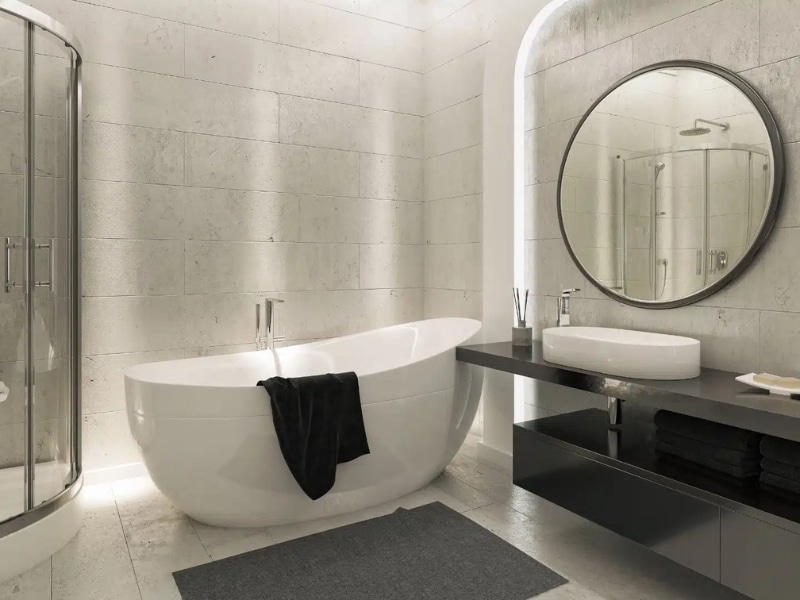
Yes, but only with the right preparation. A rushed job will peel or blister in no time.
- Glossy surfaces: Tiles and splashbacks require sanding to remove the shine, followed by a high-adhesion primer to help the paint bond.
- Flaking paint: Old layers must be scraped or sanded down; otherwise, new paint will mirror the imperfections underneath.
- Mould treatment: Any mildew must be scrubbed away with a specialised cleaner, then treated with a mould-inhibiting solution before priming.
- Damage repair: Small cracks, gaps, or dents should be patched with a waterproof filler to ensure a seamless final finish.
Skipping these steps means even premium paints won’t last, which is why understanding the best time to paint bathroom interiors also plays into achieving a longer-lasting result.
What makes bathroom painting different?
Bathroom-specific paints are designed for both appearance and performance.
Feature | Bathroom Paint | Regular Interior Paint |
Moisture resistant |
| ✘ Absorbs moisture over time |
Mould & mildew guard |
| ✘ Lacks protective additives |
Durable finish |
|
|
Cleaning safe |
| ✘ May discolour with cleaners |
 Designed to resist dampness
Using the right formulation ensures walls resist mould and remain easy to clean, particularly in high-traffic bathrooms.
Which colours make the most significant difference?
Colour affects both mood and perceived space, so choosing wisely is key.
- Light neutrals: Off-whites, warm creams, and pale greys reflect light well, making small bathrooms feel airier and more inviting.
- Cool tones: Soft blues, seafoam greens, and muted aquas create a spa-like calmness that works exceptionally well in evening lighting.
- Versatile taupes: Beige-grey blends work harmoniously with both warm and cool fixtures, making future style changes more straightforward.
- Glossy white: Highly reflective surfaces amplify light and can disguise minor surface imperfections in low-lit spaces.
If your bathroom layout or lighting is tricky, exploring interior painting approaches tailored to your bathroom needs will help you balance style with function.
What are the risks of painting your bathroom yourself?
DIY can be tempting, but mistakes are common in wet spaces.
- Poor cleaning: Residue from soaps, conditioners, or body oils forms an invisible barrier that stops paint from adhering correctly.
- Cheap tools: Budget rollers and brushes shed fibres, leave streaks, and struggle with smooth coverage on ceramic or enamel finishes.
- Skipping primer: Directly applying paint to slick or porous surfaces leads to weak adhesion, increasing the risk of peeling within months.
- Messy edges: The lack of taping or cutting-in technique results in uneven lines, making the job appear rushed.
These pitfalls often cost more to fix than hiring a professional, especially when compliance with kitchen and bathroom renovation licence requirements in NSW is needed for certain types of work.
Can professional bathroom painting increase home value?
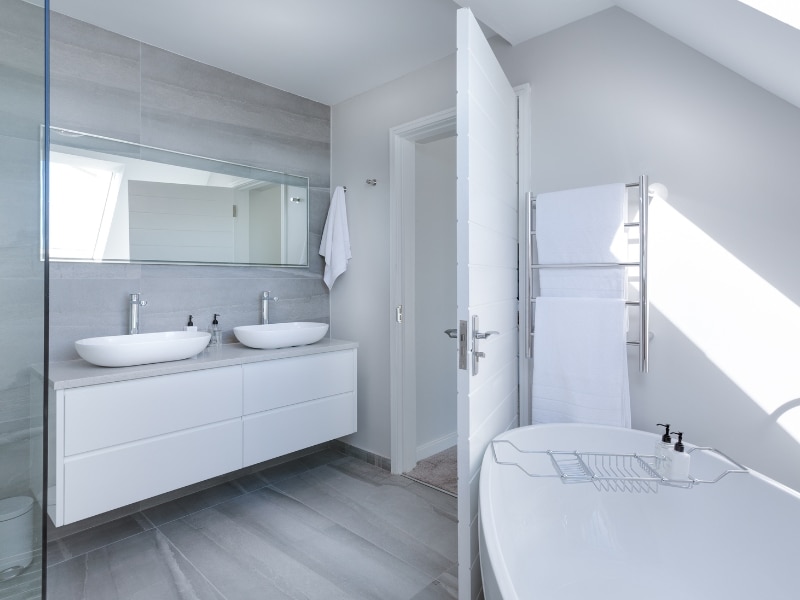
A freshly painted bathroom can make a property feel cleaner, newer, and more valuable to buyers.
- Well-maintained appearance: Clean, even finishes show buyers that the home has been cared for.
- Neutral appeal: Versatile colours make it easier for buyers to imagine their style in the space.
- Design cohesion: Matching bathroom colours with adjoining rooms ties the home together visually.
- Budget-friendly boost: Painting offers a high visual impact without the cost of a full renovation.
If you’re budgeting upgrades, painting bathroom interiors can offer strong returns compared to other small-scale projects.
Final thoughts
Refreshing your bathroom doesn’t always require a complete renovation. With proper prep and the right materials, painting a bathroom can transform the space without costing an arm and a leg. It also helps protect surfaces from long-term moisture damage, ensuring the room stays fresh and functional for years to come. If you’re unsure where to start, discover how Mi Painting & Maintenance supports high-quality paint finishes to get a better idea of what’s possible.

