
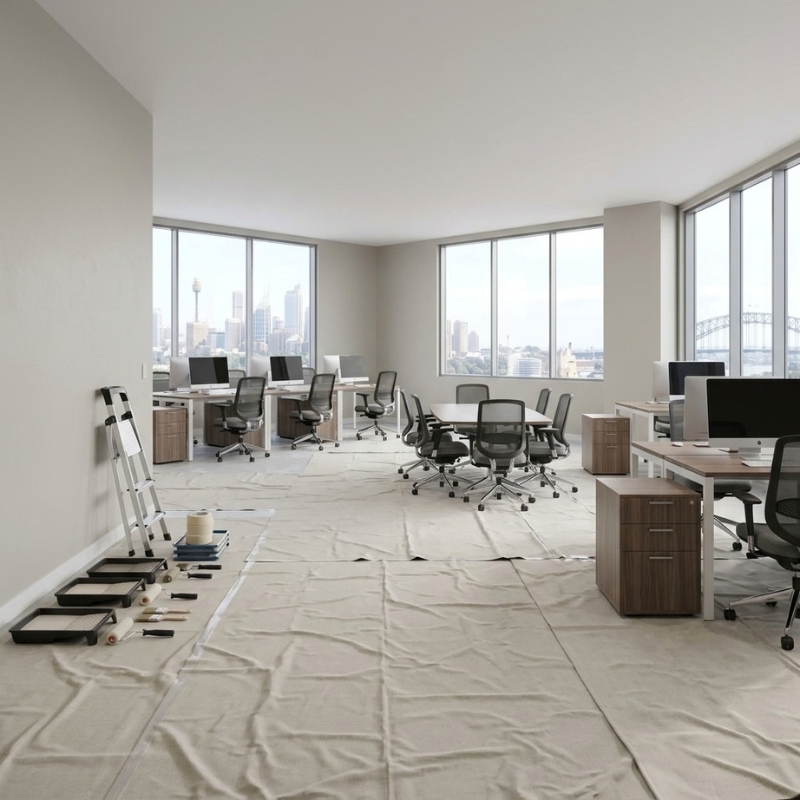
How do you schedule an office repaint around staff? Most offices are painted after hours, over a weekend, or floor by floor, so the workplace keeps running while the work gets done. The trick is choosing the approach that fits how your office operates and agreeing the details before anyone picks up a brush. MI Painting handles office and commercial repainting across Sydney, and facilities and office managers come to us with exactly this question, because the paint job itself is rarely the worry; the disruption to staff is. This article compares the three usual scheduling options, sets out what to agree before the first day, and covers keeping disruption down and planning around IT and fit-out, so your office gets refreshed without grinding work to a halt.
How do you schedule an office repaint around staff? Most offices are painted after hours, over a weekend, or floor by floor so the workplace keeps running. The approach is agreed before the job starts, along with access times, overnight furniture placement, and which areas must stay usable each day.
What are the three ways offices are usually scheduled?
There are three common ways to schedule an office repaint around a working business, and the right one depends on your hours, your layout and how much disruption you can absorb. Here is how they compare.
| Approach | How it works | The trade-off |
| After hours | Painting happens in the evenings after staff leave | Minimal disruption to the working day, but the job runs over more days and involves evening access and security |
| Weekend blocks | The work is done across one or more weekends | The office is empty so work moves fast, but it is limited to weekends and may need more than one |
| Floor by floor, business hours | One area is worked on while the rest operates | Keeps to normal hours, but staff may need to relocate from the area being painted and manage some overlap |
After hours suits an office that needs to stay fully operational through the day and is happy for painters to work in the evenings. Weekend blocks suit a business that would rather the whole thing happen while the office is empty, accepting it may take more than one weekend. Floor by floor during business hours suits a larger office that can shuffle staff between areas, keeping the business running by working one section at a time. Our office painting services in Sydney are planned around whichever of these fits your workplace best, decided together before the job starts.
What should you agree before the first day?
Whichever schedule you choose, a clear agreement before day one is what keeps the job smooth and the business running, because an office repaint touches far more than the walls. The things to settle up front are:
- Access and security arrangements. How the painters get in and out, especially for after-hours or weekend work, who holds keys or access passes, and how the building is secured when they leave. This matters most outside business hours when reception is not staffed.
- Where furniture and equipment sit overnight. Desks, chairs and equipment have to go somewhere while an area is painted, so agree in advance where they are moved to and whether they go back each morning or stay shifted until the area is finished.
- Which areas must stay usable. Identify the spaces that cannot be out of action, the ones people must keep working in or passing through, so the schedule works around them rather than blocking them.
- Who signs off each stage. Name the person who checks and approves each area as it is completed, so there is a clear point of contact and nothing is considered done until the right person is happy with it.
Getting these agreed means there are no surprises once the work starts, and the business keeps functioning because everyone knows what is happening where and when. A vague plan is what turns an office repaint into a disruption, so this groundwork is worth the time.
How do you keep disruption down?
Beyond the schedule, the day-to-day experience for staff comes down to how the work is managed, and a few things keep it from getting in the way. Low-odour product choice is the first, because strong paint smell is one of the main reasons people cannot work near fresh paint, so choosing low-odour products where suitable lets staff stay nearby in comfort rather than being driven out by the fumes.
Dust control around workstations is the second. Sanding and preparation create dust, and dust on keyboards, screens and paperwork is exactly what an office does not want, so protecting workstations and containing dust keeps people’s desks and equipment clean.
Handing each area back clean at the end of a shift is the third, and it makes a real difference to how the job feels. Rather than leaving a half-finished area strewn with gear overnight, a tidy handover means staff return to a usable, clean space each day rather than a worksite, which keeps the business running smoothly through the repaint.
The thread through all of this is respect for the fact that people are still working in the building. A repaint managed with low odour, controlled dust and clean daily handovers is one staff barely have to think about, which is the whole point of scheduling it carefully in the first place.
How do you plan around IT and fit-out?
An office is not an empty room, and the fit-out is where an office repaint differs most from a home job, so it needs planning around. A few things in particular have to be thought through before work starts.
Cable trays run power and data around the office, often along the very walls and skirtings being painted, so how they are worked around or temporarily managed needs sorting in advance. Server rooms and comms rooms are sensitive areas where dust and disruption can cause real problems, so whether and how they are painted, and what protection the equipment needs, is a specific conversation. Wall-mounted screens, monitors and displays attached to the walls usually have to come down before the wall behind them can be painted, so who removes and refits them, and when, needs agreeing. And anything else fixed to the walls, signage, whiteboards, shelving, has to be identified and dealt with before work reaches it.
The key point is that all of this is identified before the job starts, not discovered on the day, because an unexpected bank of screens or a cable tray in the way is exactly what stalls a repaint. A walk-through beforehand catches these so the schedule holds.
How long does a typical office floor take?
How long an office floor takes depends on several things rather than a single figure, so it is worth understanding what drives the duration rather than expecting one number. The size of the floor and the amount of wall area is the obvious driver, as a larger floor with more wall simply takes longer. The amount of preparation matters too, since walls that need patching, filling or repair before painting add time that a sound wall does not.
The schedule itself affects the overall timeline as much as anything: an after-hours job spread across evenings runs over more calendar days than the same work done in one empty weekend block, even though the actual hours of painting are similar. The fit-out plays a part, because time spent taking down screens, working around cable trays and protecting equipment adds to the job. And how much has to stay usable shapes it, as working around occupied areas is slower than having a clear, empty floor.
So rather than a fixed figure, the honest answer is that the duration is set by the size, the preparation, the schedule and the fit-out together, which is exactly why it is worked out for your specific office rather than quoted blind. All of these are assessed when the job is scoped on site.
Frequently Asked Questions
Can you paint an office without closing it?
Yes, painting an office without closing it is the usual approach. Most offices are painted after hours, over a weekend, or floor by floor so the business keeps running. The method is agreed in advance, along with which areas must stay usable, so staff can keep working while the repaint happens around them.
Is after-hours office painting worth it?
After-hours office painting is worth it when the office must stay fully operational through the day, since it keeps disruption to the working day at a minimum. The trade-off is that the job runs over more days and needs evening access and security sorted, so it suits offices that cannot pause during business hours.
How do you plan a workplace repaint?
Good workplace repaint planning starts with choosing the schedule that fits your hours, then agreeing access, where furniture goes overnight, which areas stay usable, and how IT and fit-out are handled. Settling all of this before the first day is what lets the business keep running smoothly through the repaint.
Planning your office repaint
The sensible first step is to work out which schedule fits your office, after hours, weekend blocks, or floor by floor, and then settle the access, furniture, usable-area and sign-off details before anyone starts. Add a walk-through to catch the IT and fit-out, and an office repaint becomes something that happens around your staff rather than to them. If you would like help planning one, or you are coordinating a broader refresh through commercial painting services, get in touch to talk to the team about office work across Sydney.

