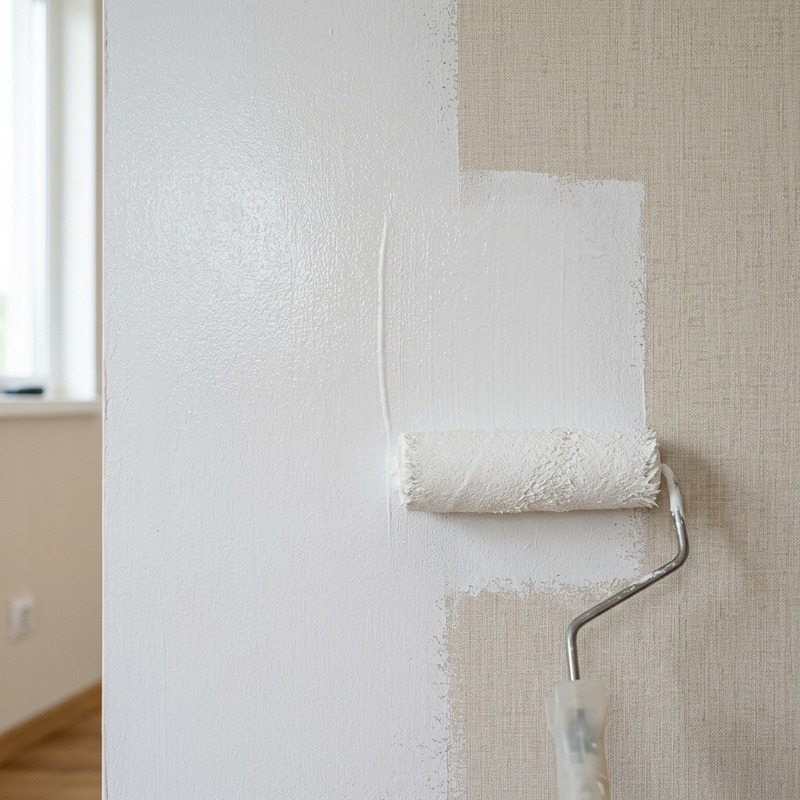
Can you paint over wallpaper? Yes, in the right circumstances, and the result can look perfectly good for years. But it is only the right call when the paper is firmly stuck down, flat, in sound condition and not vinyl or heavily textured. If any of those are off, painting over it simply locks a problem behind a fresh coat. I see both outcomes regularly, and the difference almost always comes down to ten minutes of honest assessment before anyone opens a tin.
The decision also depends on what you want the room to end up looking like. Some clients are after a clean painted wall and are happy to accept a faint hint of seams. Others are planning on hanging new wallpaper instead of covering the old, which changes the preparation entirely. Here is how I work through it.
When painting over wallpaper is a reasonable choice
There are genuine cases where leaving the paper in place is the sensible option.
The first is when the paper is thoroughly well adhered. Run your hand across the whole wall and press at every seam, corner and edge. If nothing lifts, nothing bubbles and nothing crackles, the paper is behaving like part of the wall.
The second is when removal would damage what is underneath. Older homes sometimes have wallpaper applied directly to unsealed plaster or to plasterboard that was never primed. Stripping in that situation can tear the paper facing off the board and leave you with far more repair work than you started with. If a test patch in a corner comes away with chunks of the wall attached, that is your answer.
The third is where there are many layers. Several generations of paper, all sound, can be more stable left alone than peeled back one layer at a time with increasingly unpredictable results.
And the fourth is simply practical. Smooth, paintable lining paper and plain woodchip-free papers in good order take paint readily.
When the paper really needs to come off
The flip side is longer, and it is worth being strict about it.
Any lifting, bubbling or loose seams mean removal. Paint adds moisture, and moisture reactivates old adhesive. A seam that is only slightly loose now will often lift noticeably within days of being painted.
Vinyl and vinyl-coated papers are a no. The plastic face is designed to shed moisture, which is exactly the wrong property for holding paint. Some people get away with a specialist bonding primer, but it is a gamble with a wall at stake.
Heavy texture, embossed patterns and anaglypta will still read through the paint. If the pattern is something you want gone, paint will not hide it.
Any sign of moisture, mould or staining behind the paper means you need to see the wall and deal with the cause. Covering it over traps the problem and usually makes it worse.
Lastly, if the wall underneath is uneven, patched or damaged, a full strip back and skim before repainting gives you a surface that will actually look flat under a modern low-sheen paint. Today’s finishes are far less forgiving of surface irregularity than the flat paints of a few decades ago.
How to test what you are dealing with
A few quick checks will tell you most of what you need to know.
Start with the water test. Dab a damp sponge on a small patch in a low-visibility spot. If the paper darkens and softens, it is porous and paintable. If the water beads and sits on the surface, you are looking at vinyl.
Next, pick an inconspicuous corner and try lifting it with a scraper. If it comes away cleanly in sheets, removal is realistic. If it fights you or brings the wall surface with it, leaving it is the safer path.
Then tap across the wall with a knuckle and listen. Hollow patches mean the paper has lost contact with the wall behind it, and those areas will need attention whichever way you go.
Finally, look along the wall at a sharp angle with a torch. Seams, bubbles and texture that are invisible head-on jump out under raking light, and that is exactly how they will look once paint goes on.
Preparing wallpaper properly if you decide to paint it
If the paper passes the checks, the preparation is specific and skipping any of it shows.
Glue down every loose edge with wallpaper adhesive and let it dry fully. Press seams flat with a seam roller while the glue is still wet.
Wash the wall with sugar soap to lift years of grease, dust and nicotine, then rinse and let it dry completely. Paint will not bond through a layer of grime.
Fill damaged spots with a lightweight filler, feather the edges well past the repair and sand gently. Be careful here, because aggressive sanding tears the paper face.
Then seal the lot with an oil-based or shellac-based primer rather than a water-based one. This is the step people skip, and it is the most important. A water-based primer soaks into the paper, softens the adhesive and causes the bubbling and lifting that gets blamed on the paper. An oil or shellac primer seals the surface without wetting it, and it blocks any pattern or dye that might otherwise bleed through.
Dealing with seams so they do not telegraph through
Seams are the giveaway on a painted wallpaper wall, and there is a reliable way to soften them.
Once the primer is dry, run a thin skim of lightweight filler over each seam, two to three centimetres either side, and feather it out so there is no ridge. Let it dry, sand lightly with fine paper, then spot-prime the filled areas so they do not flash under the topcoat.
It takes time, and on a wall with many seams you reach a point where a proper strip and skim would have been quicker. That is a fair conclusion to come to. On a feature wall with four seams it is well worth doing. On a whole room of narrow-width paper, think carefully.
Frequently asked questions
When is it okay to paint over wallpaper?
When the paper is firmly adhered everywhere, flat, free of damage and moisture, not vinyl or heavily textured, and when the wall underneath is in sound condition. It is also the better option where stripping would tear the plasterboard facing.
Do you need to prime wallpaper before painting?
Yes, and the type matters. Use an oil-based or shellac-based primer. A water-based primer introduces moisture that softens the old adhesive and causes bubbling and lifting.
How do you stop seams showing through paint?
Glue any loose seams flat, prime the wall, then skim a thin feathered layer of filler over each seam, sand it lightly and spot-prime before the topcoat. Check the result under raking light before you commit to the full wall.
Is it cheaper to paint over wallpaper or remove it?
Painting over usually costs less up front because it avoids the labour of stripping and any repairs that follow. Removal costs more initially but gives a better long-term surface and avoids redoing the job if the paper lifts later. Sound paper in good order favours painting over. Anything questionable favours removal.
Not sure which way to go?
If you have a room where the answer is not obvious, it is worth having someone look at the paper and the wall behind it before you decide. The team at Mi Painting & Maintenance has been working on Sydney interiors for more than 40 years and can give you a straight assessment. Call 0423 842 125, and we will go through the options with

