
When was lead paint banned in Australia? There was never a single, one-day ban. Instead, the permitted level of lead in domestic paint was reduced in stages across several decades, with the sharpest reductions happening from the 1960s onwards and the limit brought down to its current very low level by the 1990s. The practical takeaway for homeowners is simpler than the regulatory history: if your house was built or last painted before the 1970s, assume lead paint is present somewhere until testing proves otherwise.
That assumption changes how you approach the job, which is why it comes up early whenever I am looking at repainting an older Sydney home safely. It does not mean the project is off. It means the preparation stage needs to be handled differently, and that there are things you should not do yourself.
Why there is no single ban date
Lead was used in paint because it performed well. It gave excellent coverage, durability and colour retention, particularly in exterior and trim applications. Early twentieth-century paints could contain very high proportions of lead by weight.
The response, as the health risks became clear, came in steps rather than all at once. The allowable concentration in domestic paint was cut repeatedly over the following decades, each reduction taking the limit lower than the last, until the current threshold was reached in the 1990s. Today the permitted level is low enough that modern domestic paint is not a lead concern.
The staged approach is exactly why dates are slippery. A home painted in one decade may have a very different lead content from one painted in the next, and most older homes carry several generations of coating layered on top of each other. The oldest layer is usually the worst, and it is the one buried deepest.
If you need the specific current requirements, the NSW Environment Protection Authority publishes guidance on managing lead paint in homes, SafeWork NSW sets the work health and safety obligations that apply to anyone disturbing it in the course of work, and the relevant Australian standard covering the guide to the inspection and maintenance of coatings containing lead, AS 4361, sets out assessment and management methodology. Those requirements are reviewed and updated from time to time, so confirm the current version directly with those bodies before you plan any work.
Which parts of an older home are most likely to have it
Lead paint is not evenly spread through a house. Some surfaces are far more likely to carry it than others.
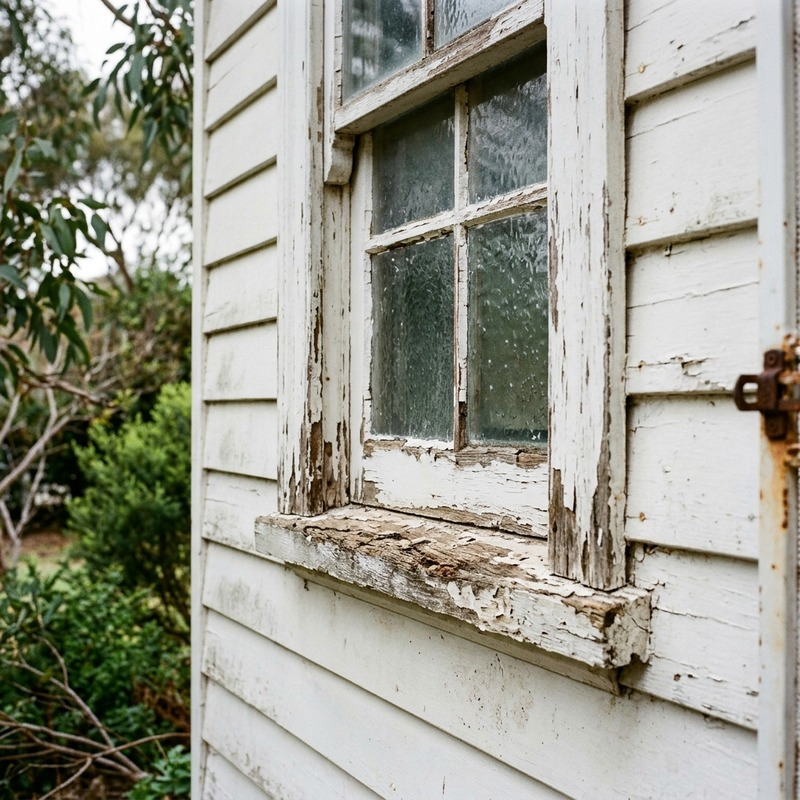
Exterior surfaces are the highest-risk area, particularly weatherboards, window frames, sills, fascias, barge boards and verandah posts. Exterior paints historically carried more lead than interior paints because of the durability it provided.
Interior trim is the next most likely spot. Doors, door frames, skirtings, architraves, window reveals and built-in joinery were commonly finished in oil-based enamels that contained lead.
Metalwork is worth a thought too. Old railings, gutters, downpipes, roof flashing and fences were often protected with lead-based primers.
Interior walls are generally lower risk, because flat wall paints tended to contain less, though that is a generalisation rather than a guarantee.
How lead paint actually becomes a problem
Intact, well-maintained lead paint sitting under later coats is not doing much harm. The risk comes from disturbance.
Sanding is the worst of it, because power sanding in particular throws very fine dust into the air where it is easily breathed in and settles across a whole property. Dry scraping does something similar at a slower rate.
Heat is the other major concern. Heat guns, blowtorches and burning off release lead fumes, and these methods should not be used on lead paint at all.
Then there is simple deterioration. Paint that is flaking, chalking or peeling sheds material into soil, onto window sills and onto floors, where it is picked up on hands and shoes.
Young children are the most vulnerable group, which matters because window sills and skirtings sit exactly at the height where small hands land. Pregnant women are also at heightened risk. Renovation work in an occupied older home is the common scenario where problems arise.
Testing rather than guessing
Visual inspection cannot identify lead paint. Colour, age, sheen and texture tell you nothing reliable.
Home test swab kits are available from hardware stores. They can give a quick indication, but they are prone to false results in both directions and they only test the layer at the surface, which in a multi-layered home is often a modern coating sitting over the one you actually want to know about.
For anything you are going to act on, use a licensed lead assessor or an accredited laboratory. Professional assessment can sample through the layers and give you a result you can plan around. Where work will be done in an occupied home, or where children are present, that level of certainty is worth paying for.
The safe approach to repainting over lead paint
The good news is that lead paint does not always have to be removed. Encapsulation, which means painting over sound lead paint with a modern coating so that it is sealed in place, is often the preferred approach where the existing paint is stable and well adhered. It avoids generating dust entirely.
That approach depends on sound preparation, and preparation is where the controls matter. Washing rather than dry sanding, wet sanding where abrasion is unavoidable, containment sheeting, HEPA vacuuming and proper waste disposal are all part of it. On exteriors in particular, stripping back and preparing weatherboard exteriors in an older home is methodical, contained work rather than something to attack with an orbital sander on a Saturday morning.
Where the paint is deteriorating badly and removal genuinely is required, that is work for a contractor with lead-specific training and the right equipment, following SafeWork NSW requirements. This is not a do-it-yourself project, and nothing in this article should be read as instructions for removing lead paint yourself.
Frequently asked questions
Can you still buy lead paint in Australia?
Not for domestic use. Permitted lead levels in domestic paint were reduced in stages through the twentieth century to the current very low threshold, reached in the 1990s. Some specialised industrial and artists’ products are handled differently under their own rules, so check the current requirements if that applies to you.
How do you know if your house has lead paint?
You cannot tell by looking. Use the age of the home as your starting assumption, then confirm with testing. Hardware store swab kits give a rough indication only and test just the surface layer. For a result you can plan work around, engage a licensed lead assessor or an accredited laboratory.
Is it safe to sand old paint yourself?
Dry sanding and power sanding of suspected lead paint should be avoided, and heat guns or burning off should not be used on it at all. Both generate dust or fumes that spread through the property. If testing confirms lead, the work needs the containment measures and equipment that a suitably trained contractor brings. Check current SafeWork NSW requirements before any work begins.
What should you do if you find lead paint?
If it is intact and well adhered, leave it undisturbed and consider sealing it in place with a modern coating. Keep an eye on it, particularly around window sills and door frames. If it is flaking or peeling, or if work will disturb it, speak to a licensed assessor and a contractor with lead-specific experience, and confirm current NSW EPA and SafeWork NSW requirements before starting.
Planning work on an older home?
Older Sydney homes are worth doing properly, and that starts with knowing what you are working with. The team at Mi Painting & Maintenance has spent more than 40 years on homes of every vintage across Sydney and can talk you through a sensible approach for yours. Call 0423 842 125 for a chat.

