
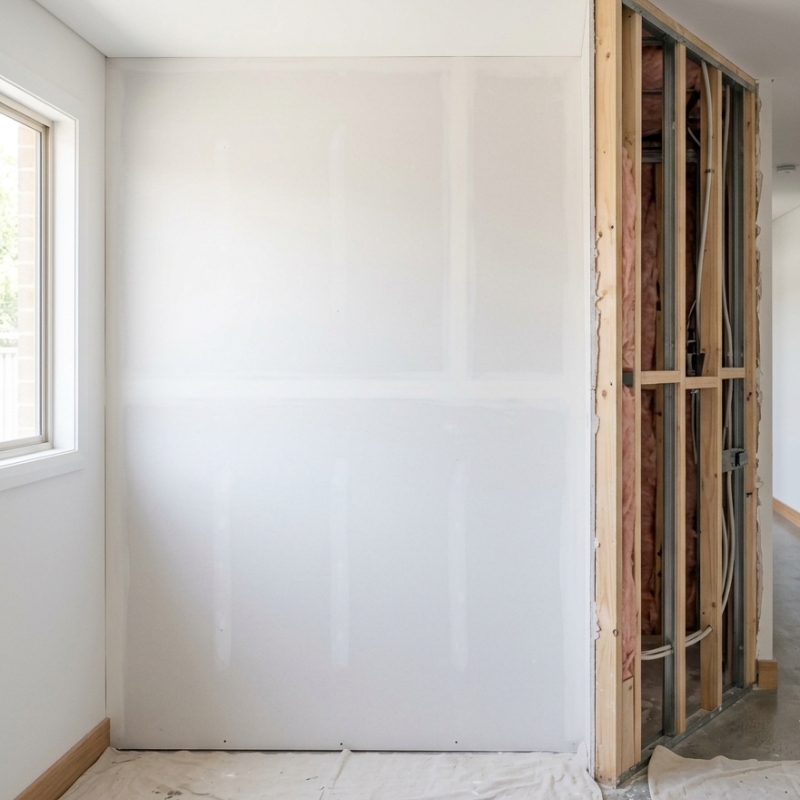
What Sets Gyprock Apart From Other Wall Linings
Across Sydney renovations, gyprocking has become a go-to option because the sheets are light, easy to cut and quick to install. Gyprock is the CSR brand name for paper-faced plasterboard, so the term is often used interchangeably with “plasterboard”. What you get is a core of gypsum plaster sandwiched between specialised liner paper that accepts paint or texture with minimal fuss.
Compared with solid masonry or old-school wet plaster, gyprock saves days on site. Once joints are taped and compound is skimmed, the wall is ready for sanding, priming and painting. That means trades can move to the finishing stage faster, controlling labour costs and helping homeowners hit project timelines.
If your project needs a clean, modern look without the weight of brick or the mess of traditional plaster, our dedicated gyprock team can generally achieve it with fewer trades on site.
Where Gyprock Excels in a Sydney Home
Gyprock’s flexibility shows up in several common scenarios:
| Situation | Why Gyprock Works Well |
| Interior renovations in older terraces | Slim 10 mm sheets preserve precious floor space while covering uneven existing walls. |
| Apartment fit-outs | Fire-rated and acoustic variants meet strata requirements without hefty concrete block. |
| Quick extensions | Lightweight panels reduce loads on existing footings and make second-storey additions feasible. |
| Decorative ceilings | Curved or stepped bulkheads are simpler to form with flexible plasterboard than with timber and plaster lathe. |
In humid Sydney summers, the paper facing can breathe, and moisture-resistant boards (often green or blue in colour) hold up in bathrooms and laundries when adequately sealed. The product range now includes high-density acoustic sheets that hush footsteps in upper-level conversions, plus mould-resistant cores for coastal suburbs exposed to salty air.
Two practical advantages stand out: first, repairs are straightforward—damaged sections can be cut out and patched rather than rebuilding a whole wall. Second, the smooth finish takes paint evenly, so colour matching during touch-ups is less noticeable. For homeowners aiming for a flawless result under downlights, these points matter more than brochure specs.
Limitations and Workarounds
No material is perfect, and gyprock shows its Achilles heel when mishandled. Blunt impacts from moving furniture can dent the surface. In high-traffic hallways or kids’ play areas, consider 13 mm impact-resistant boards or add a wainscot to deflect everyday knocks.
Moisture remains another concern. Standard plasterboard will soften if a slow leak goes unchecked. Where pipes run in cavities, install moisture-resistant sheets and insist on waterproofing membranes in wet areas. Remember that even “wet-area” gyprock relies on correct sealing—fail the membrane and the board eventually fails too.
Thermal mass is low compared with brick, so temperature swings are greater. In Sydney’s temperate climate this is manageable with proper insulation, yet if you are chasing passive-house performance you may need additional lining or external cladding to store heat.
Between those realities and the product’s strengths lies a sweet spot: living rooms, bedrooms, studies, hallways and feature ceilings, all properly detailed for moisture and impact.
Cost and Compliance Factors You Should Weigh Up
Gyprock’s material cost is only part of the equation. Finishing trades, jointing compounds, coatings and sanding machinery also drive the final figure. Homeowners sometimes focus on the sheet rate alone and overlook those extras, leading to budget creep. Expect labour to make up at least half of the installed cost on an average renovation.
Compliance matters too. The National Construction Code sets the minimum performance for wall systems regarding fire, acoustics and structural bracing. If your project involves shared walls, multi-residential work or bushfire-prone areas, ask the builder to nominate the exact board specification and associated NCC clause so you know the wall will pass final inspection.
For DIYers planning small patches, the jointing stage is where most issues surface. Poorly feathered joints telegraph through paint, leaving shiny bands under downlights. Pros use three coats, switch knife widths each pass and sand under raking light—techniques that save costly rework. A deeper dive into finishing tricks is covered in our article on fixing minor wall damage if you want to see what’s involved before lifting a trowel.
Questions to Ask Before You Lock It In
A quick checklist helps clarify whether gyprock is right for your particular build:
– What activities happen against this wall? Heavy gym equipment or kids’ indoor cricket may need impact-resistant board or a plywood backing.
– Is plumbing or wiring running inside? Future access panels or extra noggins for wall-hung vanities can be planned before sheets go up.
– How will the room be used acoustically? Media rooms and bedrooms next to bathrooms benefit from higher-density sound-rated boards.
– Are you chasing a specialty finish? Venetian plaster, brick slips or wall panelling can bond straight over gyprock when primed correctly.
– Have allowances been made for cornice, skirting and paint? Line items for finish carpentry and coatings often sit in separate quotes; confirm they exist so edges aren’t left raw.
Walking through those points with the builder or painter early prevents a wall lining decision becoming a compromise later.
The Role of Professional Installation
Plasterboard looks deceptively simple—score, snap, screw. The craft hides in setting the joints flush, keeping screw heads just below the paper without tearing it, and maintaining consistent joint gaps so compound doesn’t crack. Poor technique saves an hour today but leaves a visible ridge for the life of the room. Experienced installers also know when to stagger joints to avoid weak points, a detail that stops hairline cracks after seasonal movement.
Reputable crews carry sanding extractors that capture gypsum dust, keeping neighbouring rooms usable during multi-stage renovations. Clean-site practice avoids tracking fine powder through hallways—one of the top complaints from homeowners attempting DIY patches.
Gyprock in the Context of Australian Standards
The Australian Standard AS/NZS 2589 “Gypsum linings—Application and finishing” outlines acceptable tolerances for joints, fasteners, adhesive daubs and surface level. Ask the builder which finish level (0–5) is specified. A matte living-room paint might only require Level 4, whereas a gloss feature wall under spotlighting leans toward Level 5—one extra skim that adds time but prevents shadow lines.
Further guidance lives inside the National Construction Code (NCC) regarding fire-rated and acoustic systems. Ensuring the right board thickness, insulation and screw spacing meets code and keeps insurance assessors happy should anything go wrong in future.
Final Word on Choosing Gyprock
For most internal walls and ceilings in Sydney homes, gyprock balances speed, cost and finish quality better than alternatives such as wet plaster or full masonry. Pair moisture-resistant variants with proper waterproofing, specify impact-resistant sheets where life gets rough and let experienced installers handle joints and sanding. Do that, and the finished surface will take paint cleanly, stay crack-free through humidity swings and remain easy to repair down the line.
Your walls set the tone for every room. Spend a little extra time deciding on the right board type and installation quality now, and you’ll enjoy a resilient, good-looking finish for years.

