
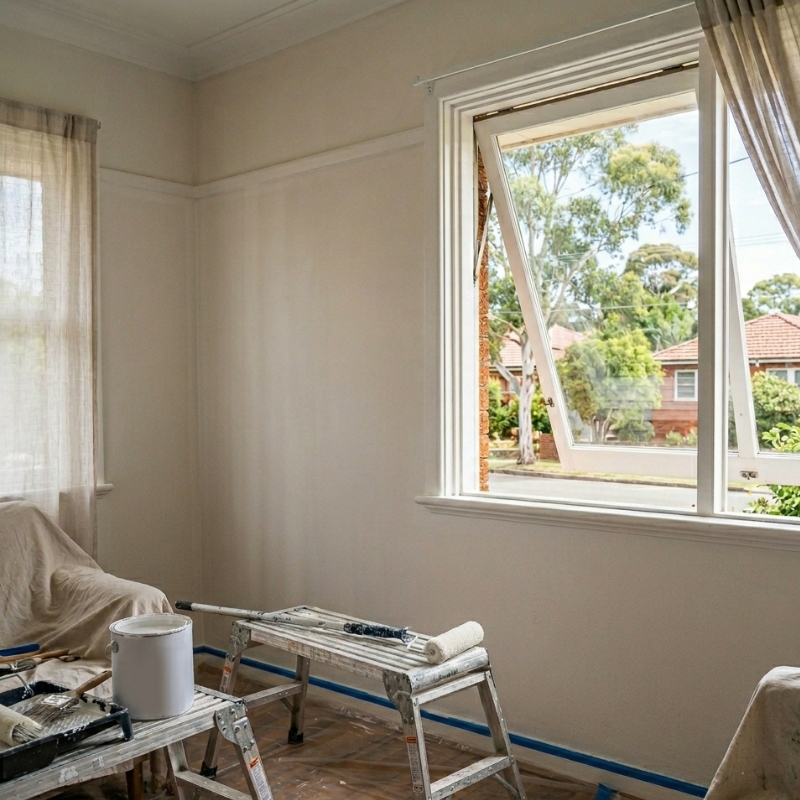
It’s hard to ignore the buzz around “eco paints” right now. From nurseries to office fit-outs, Australians are looking for finishes that smell less, off-gas less and feel safer to live with. But does choosing a low-VOC or natural formula automatically improve the air you and your family breathe? And are there any trade-offs in coverage, durability or colour depth? In this in-depth guide, we unpack the facts behind the marketing, break down the current Australian standards, and outline the practical pros and cons so you can make an informed decision—whether you’re planning a DIY weekend or calling in a Sydney painter for a full interior refresh.
1. What Exactly Are VOCs and Why Do They Matter?
Volatile Organic Compounds (VOCs) are carbon-based chemicals that easily evaporate at room temperature. Common solvent-borne paints can release VOCs for days—or even weeks—after application. While tiny amounts are usually unavoidable in modern products, higher concentrations may:
- Contribute to that lingering “new paint” odour
- Irritate the eyes, nose and throat in sensitive people
- React with sunlight indoors to create ground-level ozone
- Add to cumulative exposure when combined with cleaning agents, furnishings and floor coverings
Australian homes are often sealed tight in both scorching summers (to keep the air-con in) and chilly winters (to keep the heat in), so fresh air exchange can be limited. That’s why paying attention to the paint you spread across every wall, ceiling and trim can make a noticeable difference to perceived indoor air quality.
Australian VOC Reference Levels
The Green Building Council of Australia’s Green Star program lists a maximum of 16 g/L for flat interior wall paints. By comparison, the older solvent-based enamels many of us grew up with could exceed 250 g/L. Modern water-based enamels, low-VOC acrylics and true natural paints sit anywhere from <1 g/L up to about 50 g/L, depending on the tint system.
2. Low-VOC vs Natural Paints vs Conventional Acrylics: Quick-Fire Comparison
Choosing between formulas isn’t always straightforward. The table below summarises the practical differences most Sydney homeowners will notice:
| Feature | Conventional Acrylic (AU Standard) | Low-VOC Acrylic | Natural/Mineral Paint (e.g., clay, limewash) |
| Typical VOC Content | 30–100 g/L | <5–50 g/L (check label) | <1–10 g/L (often trace) |
| Odour During Application | Moderate, can linger a few days | Mild, usually dissipates overnight | Very mild, earthy scent |
| Coverage & Hiding Power | High; wide colour range | Similar to conventional | May need extra coats for depth |
| Durability & Washability | Good to excellent | Comparable | Varies—limewash is breathable but not scrub-proof |
| Finish Options | Matt to high-gloss, vast palette | Matt to semi-gloss, growing palette | Mostly matte/velvet textures |
| Up-Front Cost | Standard | 5–15 % more | 10–30 % more plus specialised labour |
| Best For | Most interiors | Nurseries, bedrooms, offices | Feature walls, heritage or coastal homes needing breathability |
Low-VOC acrylics aim to maintain “normal” paint performance while cutting solvent emissions. Natural or mineral paints go further, swapping petrochemical binders for clay, lime or plant oils, but they often demand different prep and application techniques.
3. Reading Australian Paint Labels Without the Marketing Spin
Paint cans sold in Australia must display VOC content in grams per litre. However, manufacturers sometimes:
- State VOCs “untinted” only—adding rich tint colours can nudge VOC levels higher.
- Use terms like “low odour” or “eco-choice” that aren’t regulated.
Tip: Look for independent certifications such as GECA (Good Environmental Choice Australia) or Global GreenTag, which require laboratory testing rather than self-declared numbers.
4. Indoor Air Quality: What Changes Can You Expect in Real Life?
Switching to low-VOC or natural products can lead to:
- A noticeably shorter “new paint smell” period. Windows can close sooner on cold or wet Sydney nights.
- Fewer complaints from asthmatic or chemically sensitive family members during and immediately after the job.
- A reduction in cumulative VOC load if paired with low-VOC flooring adhesives, cabinetry and soft furnishings.
What it won’t guarantee is a totally pollutant-free environment. Everyday activities like cooking, burning candles, or using spray cleaners also produce VOCs. Think of low-VOC paint as one meaningful slice of a larger healthy-home pie.
According to the Australian Government National Pollutant Inventory guidance, source control (choosing low-emission materials) is often the most effective first step before relying on ventilation or air purifiers.
5. Common Mistakes Homeowners Make (and How to Avoid Them)
- Focusing on Walls Only
Skirtings, doors and window trims often receive higher-sheen enamels that can carry far more VOCs than wall paints. Opt for water-based enamels labelled ≤75 g/L where possible. - Skipping Primer on Stained or Glossy Surfaces
Natural paints, in particular, require specific primers to avoid patchy absorption. An eco finish over a solvent sealer can defeat the whole purpose. - Believing “Zero-VOC” Means Zero Smell
Some natural and water-based formulas include ammonia or plant oils that still release an odour. Always trial a small area if you’re highly sensitive. - Ignoring Colour Depth Limits
Earth-based mineral paints resist deep, saturated hues. Trying to force a dark navy or charcoal may lead to extra coats or unevenness. - Rushing Ventilation
Even low-VOC coatings need drying time. Close windows too early, and residual moisture can trap a musty smell.
6. When Does Upgrading Make the Most Sense in Sydney Homes?
a) Nurseries and Bedrooms
Babies and toddlers spend up to 90 % of their time indoors. A breathable, low-emission finish can keep nighttime odours to a minimum.
b) Open-Plan Living Areas
Large volumes mean more surface area. Smell can hang around if you’re painting in humid, coastal suburbs like Cronulla or Manly, where sea breezes drop overnight.
c) Rapid Turnaround Rentals
Landlords keen to repaint between tenants often can’t wait days for fumes to clear. Low-VOC options let new occupants move in sooner without complaints.
d) Heritage or Sandstone Properties
Limewash and clay paints allow vapour to pass through soft stone, helping walls release trapped moisture—a real benefit in older terraces across Paddington or Balmain.
7. How Do Low-VOC and Natural Products Affect Your Painting Budget?
Instead of listing dollar figures (they vary by brand, colour and store promotions), weigh these complexity factors:
- Product Price Premium – Usually 5-30 % higher than mainstream acrylics.
- Extra Coats – Natural textures may need a third coat.
- Specialised Labour – Limewash and clay finishes benefit from painters experienced in layered application.
- Tinting System – Deep custom colours can increase paint and labour costs if coverage drops.
Balancing these inputs against health benefits, smell reduction and long-term satisfaction is often more useful than chasing the cheapest tin.
8. DIY vs Professional Application: Key Questions to Ask
| Question to Consider | Why It Matters | If You’re DIY-ing | If You’re Hiring Painters |
| Have you checked existing paint type? | Oil-based trim paints need sanding/priming first. | Conduct an acetone rag test. | Ask for surface compatibility in the quote. |
| Do you know the correct primer? | Natural paints often need mineral primers. | Read the manufacturer tech sheet. | Ensure the crew lists primer brand and VOC rating. |
| How will you ventilate? | Sydney’s humidity can slow curing. | Plan dehumidifiers or cross-breeze. | Confirm they allow adequate drying time. |
| Are you time-poor? | Low-VOC doesn’t mean instant dry. | Factor extra drying between coats. | Negotiate access schedules if you’ll be living at home. |
9. What the Science Says: Myth-Busting Claims
- “Low-VOC means toxin-free.”
Not quite. Pigments, biocides and ammonia can still irritate sensitive noses, though at lower concentrations than traditional solvents. - “Natural paint is always better for mould-prone walls.”
Breathable limewash can help moisture escape, but without fixing the root cause (leaks, poor ventilation) mould spores may still return. - “A single low-VOC room repaint will purify the whole house.”
VOCs disperse quickly in open-plan layouts. Benefits are most noticeable in freshly coated or enclosed spaces.
For a more holistic strategy—including surface prep tips—see our guide on repainting interior walls and air quality.
FAQs
1. Are low-VOC paints completely odourless?
No. While the chemical “paint smell” is milder, you might still notice a faint ammonia or earthy scent until the coat fully cures—usually 24–48 hours in Sydney’s climate.
2. How can I tell if my existing walls have high-VOC paint?
Age is a clue. Interior coatings applied before the early 2000s were often solvent-heavy. If you sand the surface and detect a strong odour, assume higher VOCs and wear a proper mask.
3. Do low-VOC or natural paints last as long as standard acrylics?
Quality low-VOC acrylics perform similarly to mainstream paints. Mineral finishes like limewash can patina faster, which some homeowners love for character, but others see as premature wear.
4. Is it safe to sleep in a freshly painted room if low-VOC paint was used?
Many brands claim rooms are habitable after a few hours, yet ventilation remains key. When possible, wait overnight and keep windows ajar before moving back in—especially for babies or anyone with asthma.
5. Will switching paints alone fix my home’s musty smell?
Only if the odour stems from solvent off-gassing. Persistent damp, mould or poor ventilation requires separate treatment.
Final Thoughts
Choosing a low-VOC or natural paint isn’t just a feel-good trend—it can make tangible improvements to comfort during and immediately after a repaint, particularly in tightly sealed or frequently used rooms. Yet performance, budget and maintenance still matter. If you’re juggling colour dreams, air-quality concerns and practical wear-and-tear, weighing product labels against real-world use cases is your best path to a healthier, longer-lasting finish. When in doubt, talking through options with an experienced, eco-aware Sydney painting team can help you nail both appearance and peace of mind—without the lingering fumes.