
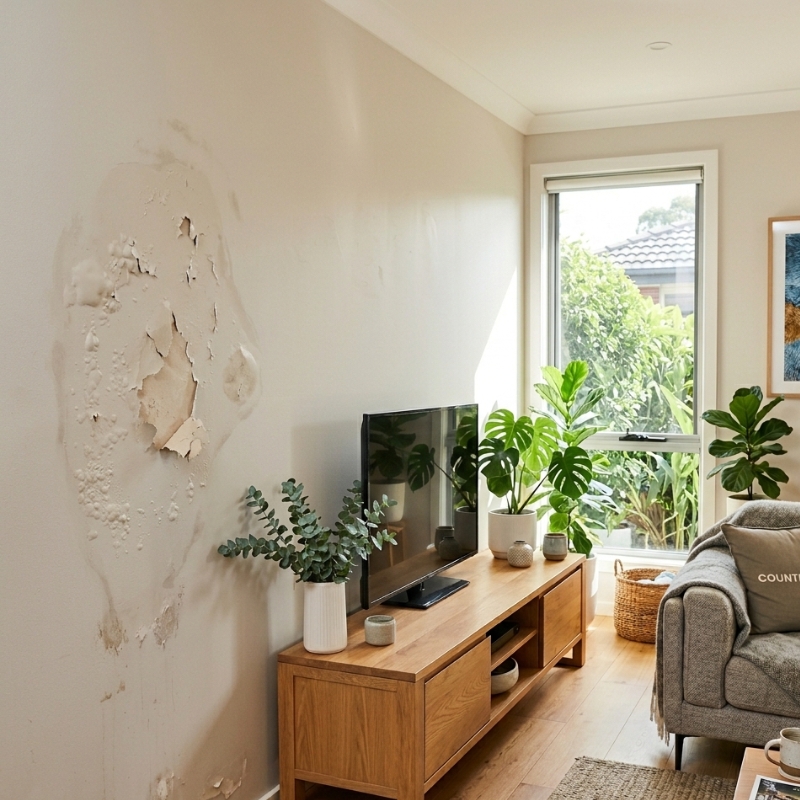
A tidy touch-up can hide the odd scuff, but it won’t fix paint that’s tired right through the layers. Knowing when your Sydney home needs a full repaint versus a small patch job saves time, money and frustration — and protects the look and value of your biggest asset. This guide walks you through the tell-tale clues, local climate factors and DIY checks that reveal when it’s smarter to book professional residential painters rather than reach for the touch-up tin.
Why Fresh Interior Paint Still Matters Long After the Builders Leave
Interior paint does far more than colour a room. It:
- Protects plasterboard and Gyprock from moisture and surface wear
- Hides construction joints, fasteners and past repairs
- Reflects light to brighten compact Sydney rooms
- Seals porous surfaces so future cleaning is easier
- Helps reduce dust and allergen build-up when the finish remains intact
In busy family homes, a coat that looked flawless at handover can start failing in just a few years, especially with kids, pets and the region’s humidity. Repainting at the right moment keeps small issues from becoming large, costly repairs.
Repaint vs Touch-Up: What’s the Real Difference?
A fast touch-up can be tempting, but it delivers a different outcome from a full repaint. The table below breaks down the main contrasts.
| Situation | Touch-Up (Spot Repair) | Full Repaint |
| Scope | Localised; one wall or small patches | Entire walls, ceilings, trims or rooms |
| Prep Needed | Minimal sanding, cleaning and feathering | Comprehensive surface prep, repairs, priming, two coats |
| Colour Match Risk | High — existing paint may have faded | None — fresh, uniform colour |
| Finish Consistency | Can leave flashing or sheen variation | Consistent sheen and texture throughout |
| When Suitable | Isolated scuffs, new picture-hook holes | Widespread wear, fading, peeling, uneven colour |
| Typical Lifespan Gained | 6–18 months before the same spot shows again | 5–10 years depending on quality and conditions |
A touch-up is ideal for light cosmetic issues. Anything structural, moisture-related or widespread needs a clean slate.
Early Warning Signs Your Walls Only Need a Quick Touch-Up
Before you book a bigger job, check for these minor issues that a small patch can handle:
- Single scuff marks where furniture brushed the wall
- A nail hole left after moving artwork
- Very small chips near door frames from vacuum bumps
- Minor water splashes in a kitchen corner with no stain spread
- Kids’ fingerprints in a concentrated lower section of one wall
For these, light sanding, cleaning and dabbed-on matching paint usually restore the look — provided you still have the original tin or can get an accurate colour match.
Red Flags Suggesting It’s Time for a Full Repaint
The following symptoms tell you the paint film itself is breaking down and a surface-level fix won’t last.
1. Fading or Uneven Colour Across the Wall
If large areas appear dull, patchy or a different shade from protected zones behind photos, the pigments have degraded. See also our deeper dive into signs of interior paint fading for more examples.
2. Peeling, Flaking or Bubbling
Moisture, poor surface prep or incompatible layers can cause paint to lift. Peeling spreads quickly once the bond is lost.
3. Persistent Stains Bleeding Through
Nicotine, candle soot or water stains that ghost back after cleaning usually need stain-blocking primer and fresh coats.
4. Cracking or Crazing
Fine lines or ‘alligator skin’ texture show the film has become brittle. Over-painting such cracks without a full sand often sees them re-appear.
5. Chalky Residue on Your Hand
Rubbing the wall and finding white, powdery residue means binder breakdown. New paint won’t stick unless the surface is stabilised and coated again.
6. Mould or Mildew Patches
Simply wiping may remove the surface colony, but the spores often lodge in the coating. A fungicidal wash plus new mould-resistant paint is safer.
Sydney-Specific Factors That Shorten Interior Paint Lifespan
Local climate and lifestyle have a bigger say in paint ageing than you might think.
- Coastal Salt Air: Homes near Bondi, Cronulla or Manly experience salt particles indoors via open windows, subtly abrading paint films.
- High Humidity Summers: Western Sydney’s muggy days raise interior moisture, stressing bathroom and laundry paints.
- Strong Winter Heating: Reverse-cycle air-con dries out air, causing timber frames to move and hairline cracks to open.
- Urban Pollution: Busy arterial roads such as Parramatta Road can leave a fine film of soot that dulls lighter walls sooner.
- Family Traffic: Narrow terrace hallways and child activity zones see more bumps and fingerprints, increasing repaint frequency.
Quick Self-Inspection Checklist
Not sure where your walls sit on the lifespan curve? Spend ten minutes walking room to room with the list below.
| Check Point | What to Look For | Likely Next Step |
| Colour Consistency | Compare spots behind frames to exposed sections | If noticeable fading, plan for repaint |
| Surface Texture | Run hand over surface for chalkiness or cracks | Chalky = wash & repaint, cracked = strip & repaint |
| Finish Sheen | Stand side-on under light to spot dull or patchy zones | Uneven sheen signals full repaint |
| Lower Wall Scuffs | Kids & pet height marks only? | Spot touch-up may suffice |
| Ceiling Lines | Peeling at cornice or air-con vent stains | Repaint with moisture-blocking primer |
| Bathroom Corners | Mould regrowth after cleaning? | Treat & repaint with mould-resistant paint |
| Window Frames | Flaking or discoloured edges | Scrape, prime & repaint entire frame area |
A pattern of two or more repaint indicators in the same room typically means a comprehensive job will be more economical long-term.
Common Mistakes Homeowners Make When Choosing Between Repaint and Retouch
- Trusting memory for colour matches — factory tints vary; always keep the original paint code.
- Touching up over dirty walls — grime stops fresh paint bonding and shows through.
- Ignoring surface sheen — semi-gloss patches on a low-sheen wall flash visibly.
- Painting over moisture damage without fixing the leak — the new coating bubbles again.
- Underestimating prep work — skipped sanding and priming make retouched patches obvious.
DIY or Call in a Professional? A Safe Middle Path
Small cosmetic patches are reasonable weekend jobs if you:
- Sand and feather edges smoothly
- Clean with sugar soap and allow to dry completely
- Use identical paint type, sheen and batch where possible
- Blend out beyond the damaged area, not just the spot
However, move to professional help when:
- Multiple walls show issues
- You see lead-based paint in homes built before 1970 (check NSW Health lead paint safety advice)
- Water damage or mould is present
- The ceiling requires working at unsafe heights
- Colour change is involved — cutting in multiple coats neatly is harder than it looks
A skilled painter can also recommend durable, low-VOC formulas that better handle Sydney’s humidity and lifestyle demands.
FAQs
1. How often should interior walls be repainted in Sydney’s climate?
Many builders quote seven to ten years, but coastal salt, kids, pets and heating cycles can shorten that to five. High-traffic rooms like hallways or play areas often need attention sooner, while rarely used guest rooms can last longer.
2. Can I just paint one wall instead of the whole room?
Yes — accent or feature walls are common. Just ensure colour contrast is intentional. If you repaint only one wall in the same colour and the others are faded, the fresh wall may look noticeably brighter.
3. Is low-VOC paint as durable as regular paint?
Modern low-VOC acrylics from reputable brands perform on par with traditional formulas when applied over a properly prepped surface. They’re an excellent choice for bedrooms and living areas where air quality matters.
4. What’s the best season for interior repainting in Sydney?
Autumn and spring offer mild temperatures and lower humidity, which help paint cure evenly. Winter is still viable with good ventilation, but avoid days of heavy rain that raise indoor moisture.
5. Do I need to move all my furniture out for a full repaint?
Not necessarily. Shift larger pieces to the room’s centre and cover with drop sheets. Fragile items and wall art should be removed. Professional painters will handle protective sheeting and masking.
Final Thoughts
A spotless interior finish boosts comfort, lighting and property value — but only if the coating beneath is sound. By watching for the early warning signs above and understanding Sydney’s unique paint stressors, you can decide confidently whether a strategic touch-up will do or a full repaint will ultimately save time, money and frustration. If several red flags appear, a thorough inspection and quality repaint usually pay dividends for years.

