
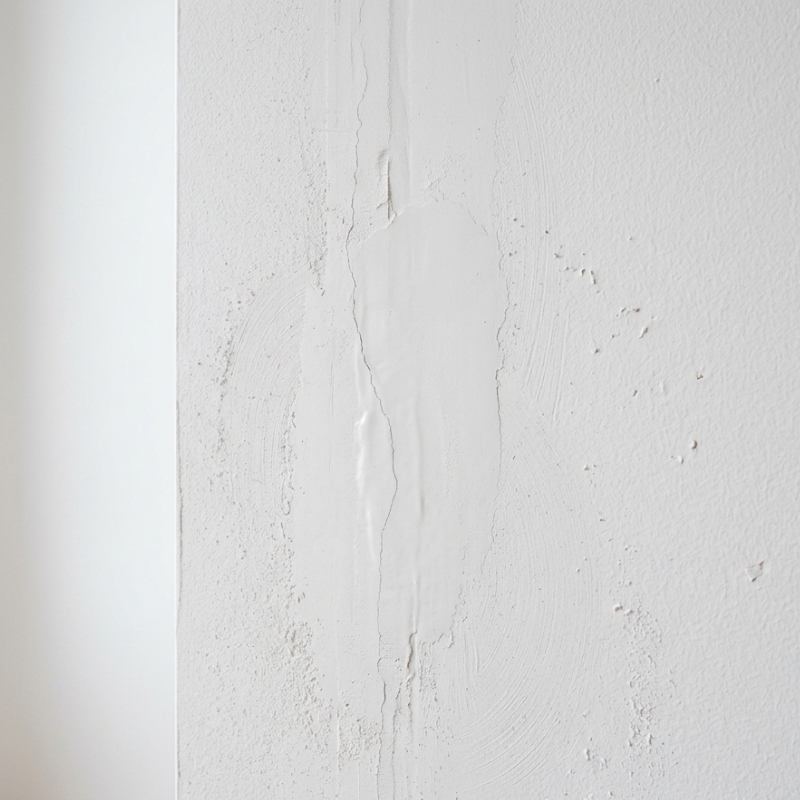
A freshly painted wall ought to stay flawless for years. So it’s galling when faint hairlines start creeping back just months after you’ve patched and repainted. Recurring gyprock cracks aren’t only a cosmetic nuisance — they’re a sign of something underneath: movement, moisture, or a corner cut during the original job. A quick skim coat almost never gets to the bottom of it. Before you book yet another patch-and-paint, it’s worth understanding why the cracks keep coming and which repairs actually hold. And if you’d sooner have it done the first time round properly, our team handles professional gyprocking in Sydney.
The Real Reasons Cracks Keep Reappearing
Sydney’s weather does a lot of the damage. Humid summers, those dry westerlies, colder winters — the wall cavities are expanding and contracting all year round. Plasterboard joints can take a bit of movement, but flex them constantly and eventually the paper face tears and tiny gaps open in the compound. Plenty else piles on the stress, too. Terracotta roof tiles soak up rain and get heavier. Timber frames dry out and shrink after a wet season. And on inner-city streets, the constant rumble of traffic works away at ceilings and internal walls.
Then there’s how the joints were prepped in the first place. If the installer ran single joints instead of staggering them, or skipped the recommended three coats of setting compound, that joint line is always going to be the weak point. Older terraces bring their own version of this — patch lath-and-plaster with modern compound and you often get outline cracking, because the old substrate behind it never settles evenly.
Moisture earns a mention of its own. A bathroom with no exhaust fan, a south-facing bedroom that never quite dries out, a place near the coast — they all sit with high humidity. Damp gypsum swells, the paper liner goes soft, and cracks open up beside the cornices or around window reveals. Until you deal with where the moisture’s coming from, any surface repair is just buying time.
Proven Repair Methods That Stick
A repair that lasts has to tackle the stress underneath, not just the line you can see. The methods that actually work in Sydney range from a reinforced setting compound through to a flexible acrylic caulk — and, when the movement just won’t quit, rebuilding the joint back to the frame. Here’s how the common options stack up.
| Repair approach | Typical lifespan in the Sydney climate | Advantages | Hidden downsides |
| Light skim with premixed filler | 3–12 months | Fast, cheapest materials | Re-cracks the moment seasons turn |
| Paper tape + setting compound over the existing joint | 2–3 years | More flexible, paint-ready | Won’t hold if the framing keeps moving |
| Rake out the joint, add fibreglass mesh, three-coat setting compound | 5+ years | Reinforcement spreads the load | Labour-intensive; plenty of dust to contain |
| Cut back to the studs, insert a control-joint bead, flush finish | 10+ years | Copes with ongoing movement | Higher cost; best to repaint the whole wall |
Thinking of trying a patch yourself first? Our step-by-step guide on safe wall preparation before painting runs through dust control, mixing the compound properly and getting the sanding sequence right.
More Sydney builders are reaching for flexible acrylic joint sealants along ceiling perimeters, too. They’ll absorb a season’s worth of frame movement without tearing the paint film — as long as the sealant stays paintable and goes on at the thickness the manufacturer specifies. In bathrooms, pairing a mould-resistant setting compound with a primer-sealer stops humidity from wicking into the gypsum core.
Signs It’s Time for Professional Help
Hairlines confined to a single wall usually just mean a bit of seasonal movement. Cracks that are spreading or widening are a different story — that’s more likely framing, foundation or moisture, and it’s a job for a qualified gyprocker. The signs it’s time to make the call:
- Cracks running on the diagonal out of a door or window corner — a classic sign the frame’s racking.
- Ceiling joints starting to sag, or edges going discoloured. That one’s a moisture warning.
- Old patches flaking away, which tells you the adhesion underneath was never right.
A proper inspection sorts out what’s actually needed — it might be stitching screws driven into the framing, it might be fresh expansion joints, or in the bad cases a whole sheet coming out and going back new. Once the structural side is handled, a clean finish coat brings the wall back to paint-ready, with no patch outlines telegraphing through later.
FAQ: Recurring Gyprock Cracks
Why do cracks reopen after I repaint?
Paint is just a film — it does nothing to reinforce the joint. If the movement or the moisture is still there, the substrate cracks again underneath your fresh coat.
Is mesh tape always better than paper tape?
Mesh spreads load well, but it stays visible under a light skim. In a living room with critical lighting, paper tape and a three-coat compound give you a smoother finish.
Can I just caulk the crack and paint?
Caulk’s fine for the gap between cornice and ceiling, where you expect movement. On a flat wall joint, it leaves a texture difference and won’t sand back nicely.
Do minor cracks lower property value?
Buyers tend to read visible cracks as neglect, or worse, structural trouble. Fixing them properly before you list stops people haggling on fear instead of fact.
For the broader building standards — the installation tolerances and acceptable finish levels for plasterboard — NSW Fair Trading keeps clear guidance online. NSW Fair Trading’s renovating resource is worth a look for the current recommendations.
)
&description=&image=https://mipainting.com.au/wp-content/uploads/2026/07/Why-Gyprock-Cracks-Keep-Coming-Back-in-2026-Sydney-Homes-and-What-Actually-Fixes-Them.jpg)