Does Commercial Building Paint Affect Brand Perception?
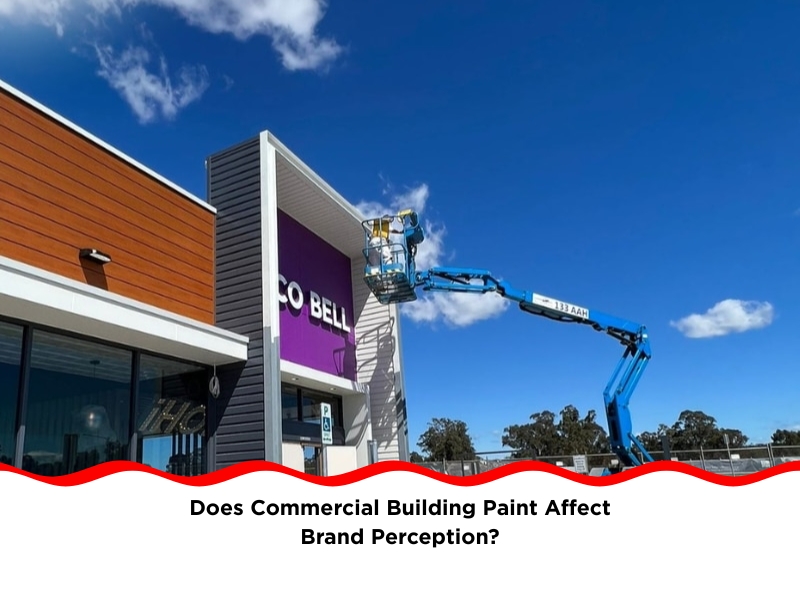
Painting a commercial facility is more than aesthetics — it’s a visual handshake to clients, staff and the community. The choice of commercial building paint can reinforce a brand’s identity, instil confidence, and signal professionalism. The wrong paint — dull, peeling, mismatched — undercuts that impression and raises quality questions. A well-chosen and well-applied paint system can enhance interiors, protect exteriors from the elements, and offer long-term value. To stay ahead, facility managers must understand surface preparation, performance specifications, and the subtleties of colour selection, eco-friendly paints, and design choices that reflect their brand’s tone. Below, the fundamentals and technical know‑how you’ll need to keep your building’s visual appeal and integrity strong — and avoid the common mistakes to avoid in commercial painting — from lobby to rooftop.
What commercial building paint specifications suit high‑traffic interiors?
Interiors in lobbies, corridors, retail zones, or shared spaces are subject to constant use. That demands paints that resist scuffing, abrasion and frequent cleaning. Here are the key specifications and design choices:
- Choose paints with a high‑wash or scrubbable rating (Class 1 or better).
- Opt for low‑VOC or odourless paint for interiors to protect air quality during and after application.
- Use finishes like satin or eggshell instead of glossy ones—they strike a balance between durability and visual appeal.
- Incorporate accent wall colour palettes tied to your brand to reinforce identity.
- Install corner guards or semi‑gloss finishes at impact zones for extra protection.
Careful substrate preparation is essential: patch, prime and ensure complete curing before topcoats. Also, it’s worthwhile to plan for painting techniques for various wall surfaces—for example, different porosity in drywall vs concrete block.
If your interiors suffer from oily or greasy soils (cafeterias, kitchens), consider acrylic‑modified epoxy primers beneath topcoats. By investing in cost-effective yet robust systems inside, you avoid frequent touch‑ups that disrupt operations—and preserve that polished impression.
How does commercial building paint handle high‑rise exteriors and access challenges?
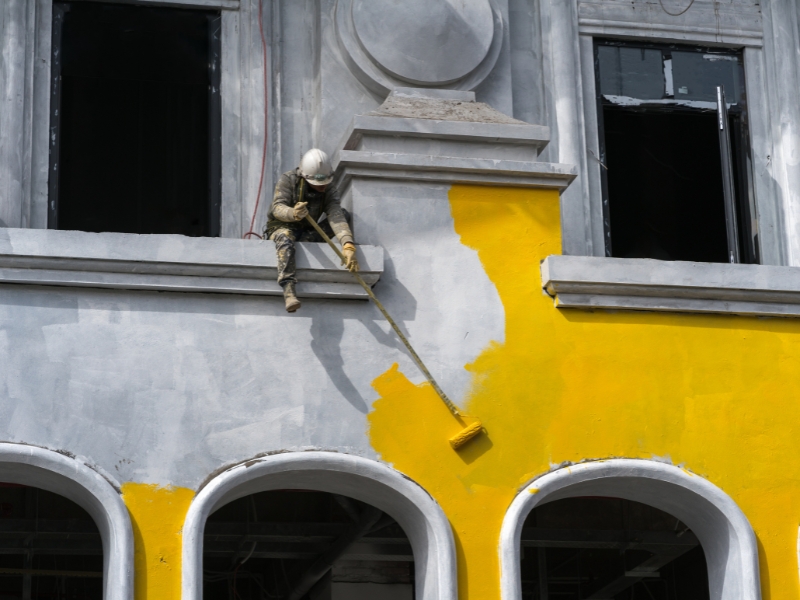
Painting tall exteriors introduces complexities: weather, access, height, and safety. The right system, combined with a proper access strategy, makes a difference.
- Use weather‑resistant acrylic or fluoropolymer coatings that resist UV fade, chalking and moisture ingress.
- Consider systems with anti‑carbonation or elastomeric properties for concrete façades.
- For heights beyond scaffolding reach, deploy rope access, swing stages or boom lifts with fully trained teams.
- Select vandal‑resistant or graffiti‑resistant topcoats where public access is possible.
- Adjust cure times and schedule for seasonal commercial painting trends, such as painting in milder months to avoid extremes.
Access planning often dominates cost and timeline. In such projects, reliable maintenance painting services for commercial facilities are crucial for coordinating logistics, obtaining scaffolding permits, and ensuring safety compliance. Also, careful staging avoids costly repeat work. For example, partial height coatings often reveal mismatches decades later. Thus, planning a commercial paint project means aligning building geometry, maintenance intervals and access strategies early.
Which commercial building paint systems are best for hospitals, schools and offices?
Each of these environments has unique hygiene, durability and aesthetic demands. Here’s a breakdown:
Hospitals/healthcare zones:
- Use antimicrobial or hospital‑grade paints in sensitive zones.
- Ensure low-odour and low‑VOC formulations, especially in enclosed wards.
- Provide a wipeable finish to meet infection control protocols.
Schools/education:
- Choose washable and scuff-resistant coatings for hallways, classrooms, and play areas.
- Use colour accents or murals to enliven learning environments.
- In common areas, incorporate finishes that can withstand repeated touch.
Offices / commercial spaces:
- Brand-aligned neutral palettes, combined with accent walls, support professional tone.
- Use low‑maintenance finishes for walls and trim.
- In shared zones (toilets, kitchens), use coatings with higher wash durability.
In all these, avoid mistakes such as applying interior paints outdoors, choosing incompatible primers and topcoats, or neglecting proper cleaning schedules. You’ll also want to ensure that you avoid mistakes by using sample patches, humidity checks, and substrate moisture tests. To support high visual quality, understanding why commercial painting matters for business spaces, for design rationale.
When should commercial building paint include anti‑graffiti or protective coatings?
Anti‑graffiti and protective coatings are no longer optional in many settings—they’re preventative insurance against vandalism and surface deterioration. Consider these triggers:
- Public accessibility: façades near walkways, alleys or vehicle routes.
- High-risk zones include delivery bays, parking garages, and underpasses.
- Painted signage areas or surfaces that carry branding.
- Historic or architectural facades where the original substrate must remain visible.
Effective systems include sacrificial transparent coatings, polyurethane or polysiloxane sealers, and gel coats that allow graffiti removal without harming the underlying finish. Before specifying, consider how many cycles of graffiti removal the topcoat can withstand.
When you adopt protective systems, you support sustainable solutions (reducing repainting waste) and lower ongoing maintenance costs. Use these in tandem with your base paint to build a layered defence. In many cases, specifying anti-graffiti coatings pays off far down the line, especially when paired with high-quality finishes for modern commercial wall projects.
How do surface preparation and lead removal extend coating life on older sites?
Neglecting surface prep is one of the biggest culprits behind coating failure. Especially on older buildings, remediation is a must.
- Conduct comprehensive lead paint testing/remediation in accordance with NSW guidelines for safe surface coating practices.
- Use power wash, abrasive blast, or chemical stripping where needed—followed by thorough rinsing and drying.
- Remove all loose substrate, rust, efflorescence and chalking.
- Perform profiling (e.g. SSPC‑SP standards) to create an adhesion key.
- Prime using corrosion inhibitors or penetrating primers, especially on masonry or porous blockwork.
Below is a quick comparison:
| Issue with the old substrate | Risk if untreated | Recommended prep action |
| Loose paint/flaking | Delamination of new coats | Strip, abrade, clean |
| Lead residue | Health & regulatory liability | Lead testing/encapsulation |
| Surface chalking | Poor adhesion | Acid wash or blast |
| Rusting metal elements | Creep under coatings | Rust convert + primer |
Proper preparation enhances the performance of any paint you apply and reduces the likelihood of peeling or blistering. Many signs that it’s time to repaint (e.g., adhesion failure, visual discolouration) tie back to poor preparation rather than coating quality itself.
How often should commercial facilities schedule repainting and maintenance?
Repainting cycles depend heavily on exposure, substrate, coating system and usage. As a rule of thumb:
- High‑traffic interiors: every 5–7 years
- Exterior façades in moderate climate: every 7–10 years
- Harsh climates (coastal, sun, pollution): 5–8 years
- Warehouse floors: annual inspection, full recoat every 7–10 years, depending on load
Regular maintenance—spot touch-ups, wash-downs and graffiti removal—bridges the gaps between full repaints. Monitoring colour fade, checking adhesion, and budgeting domain by domain helps you budget more effectively.
For complex or high-rise sites, phase your work well in advance of visible deterioration. At the end of the day, learn how Mi Painting & Maintenance delivers long-lasting results, which helps you understand how these cycles fit into a reliable program. By making wise paint choices—considering sustainable solutions, colour design, substrate prep and protective layers—you reinforce brand integrity for years rather than patches.

