
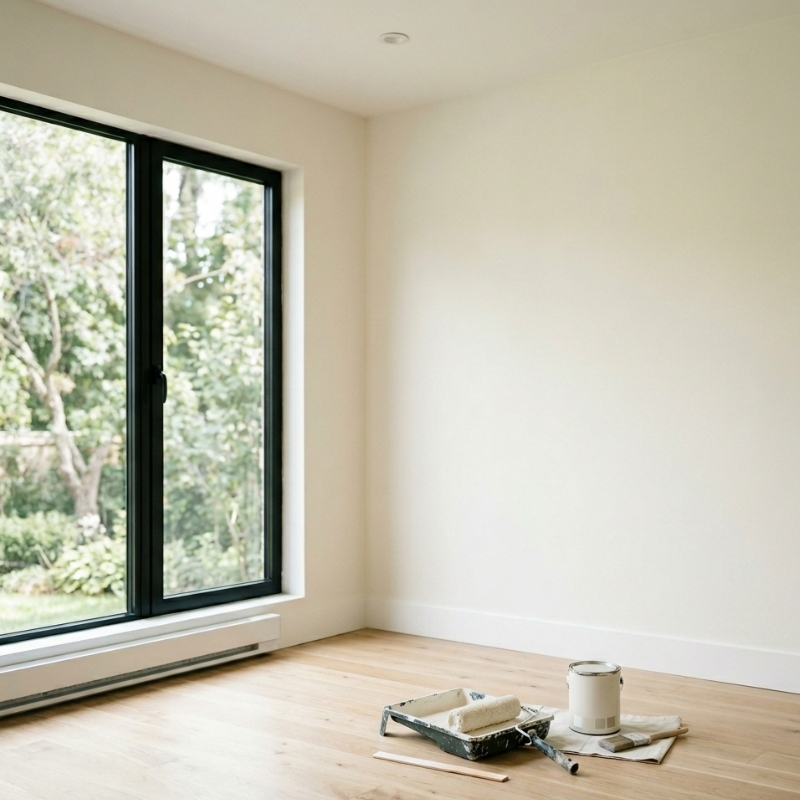
Stuffy rooms, persistent odours and worries about hidden toxins often nudge Sydney homeowners to hunt for “healthier” paint. A decade ago, low-VOC labels felt like a niche. Fast-forward to 2026 and even major paint lines now boast ultra-low emissions, plant-based binders and allergy-conscious formulas. But does the marketing hype match real-world air-quality gains? Below we unpack the latest science, standards and product innovations, plus simple checks you can do before, during and after a repaint. If you would rather leave the testing, product selection and meticulous clean-up to qualified pros, our professional painters in Sydney can help you breathe easier without the hassle.
1. VOCs, Natural Binders and New Aussie Standards: A 2026 Snapshot
Volatile organic compounds (VOCs) are chemicals that evaporate into the air as paint dries. Traditional acrylics could release more than 120 g of VOCs per litre. In 2026, updated Australian Paint Approval Scheme (APAS) categories push interior flat finishes toward the 16 g / L mark, with some specialty brands dipping below 5 g / L.
1.1 Why the Limits Keep Getting Stricter
- Consumer demand: Searches for “non-toxic paint” in NSW grew 34 % year-on-year.
• Health research: Respiratory groups link some VOC types to asthma aggravation.
• Building codes: Green Star and WELL certifications favour ultra-low-VOC coatings in new commercial and multi-unit projects.
1.2 Natural Paints Enter the Mainstream
Clay, lime, casein and plant-oil formulas once belonged to boutique suppliers. Large brands now produce hybrid lines that swap petrochemical binders for renewable ingredients while still passing washability and scrub tests. The trade-off? Shorter shelf life and a slightly higher price per litre.
2. Low-VOC vs Natural vs Standard Acrylic: Quick-Glance Comparison
Choosing a “healthier” paint is easier when you can see key differences side-by-side.
| Paint Type | Core Ingredients | Average VOC (g / L) | Durability on Interior Walls | Typical Dry Time | Best-Fit Rooms | Watch-Outs |
| Standard acrylic | Petrochemical binders, synthetic pigments | 50–120 | 7–10 years | Touch-dry 30–60 min | High-traffic areas needing scuff resistance | Noticeable wet smell, longer off-gassing |
| Low-VOC acrylic | Modified acrylic resins, low-solvent additives | 5–50 | 7–10 years | Touch-dry 30–45 min | Bedrooms, nurseries, offices | Still emits minor odour while curing |
| Ultra-low/Zero-VOC | Water-borne binders, advanced coalescents | < 5 | 5–8 years (slightly softer) | Touch-dry 20–40 min | Allergy-sensitive spaces | Limited colour range in darker tints |
| Natural mineral | Clay, limewash, silicate | < 10 | 10–15 years (breathable) | Longer initial cure, up to 48 h | Heritage walls that need vapour permeability | Needs mineral substrate, chalky feel |
| Natural plant-based | Casein, linseed, citrus solvents | 10–25 | 5–8 years | Touch-dry 1–2 h | Rustic finishes, eco-renovations | Can yellow in low light, longer full cure |
A lower VOC count is not the only consideration. The binder, pigment source and room conditions all influence performance and air quality.
3. How 2026 Formulas Actually Reduce Indoor Pollutants
Advances are more than clever re-labelling. Key breakthroughs include:
- Water-borne coalescing agents that cut solvent requirement by up to 90 %.
- Odour-neutral resin technologies derived from sugar cane and canola oil.
- Micro-porous natural mineral paints that absorb and re-emit humidity, helping regulate condensation and mould risk.
- Nanoclays that replace a portion of titanium dioxide, lowering energy use in manufacturing and reducing photochemical smog potential during drying.
Reference levels from NSW Health guidelines suggest indoor VOC readings below 0.5 mg / m³ as generally acceptable for most households. Independent lab tests on several leading ultra-low-VOC brands in 2025 showed post-application readings of 0.12–0.18 mg / m³ within 48 hours, outperforming standard acrylics that remained near 0.4 mg / m³ for days.
4. Simple Steps Homeowners Can Take to Maximise Air-Quality Gains
Low-VOC paint helps, but real-life results depend on your prep, application and after-care.
4.1 Before You Open the Tin
- Check the manufacture date; older low-VOC tins can thicken, leading to more splatter and sanding.
• Plan ventilation routes. Cross-breeze plus an exhaust fan halves residual odours compared to closed-room drying.
• Remove soft furnishings or seal them in plastic to avoid fabric absorption of any off-gassing.
4.2 During Application
- Use a quality synthetic microfibre roller; cheap foam rollers shed particles that can trap emissions inside the coating film.
• Keep indoor humidity between 40–60 % with a dehumidifier. Too-low humidity forces faster evaporation and may cause micro-cracking.
4.3 After the Final Coat
- Ventilate for at least 24 hours even with zero-VOC paint.
• Delay moving babies, elderly family members or pets back into freshly painted rooms until you can no longer smell any odour.
• Record the product name and batch so you can match it for future touch-ups without guesswork.
5. Common Misconceptions That Persist in 2026
| Misconception | Reality |
| “All natural paints are allergy-safe.” | Citrus oil and natural turpentine in plant-based paints can trigger sensitivities. Always check the full ingredients list. |
| “Zero-VOC means zero smell.” | Some water-borne additives still carry a mild odour even if they do not count toward VOC totals. |
| “Low-VOC products never mould.” | Mould depends on moisture. Even mineral paints need good ventilation in bathrooms. |
| “Low-VOC is always more expensive.” | Big-brand low-VOC lines are now price-matched with mid-tier standard acrylics due to volume production. |
6. Decision Framework: Which Paint Fits Your Room Best?
| Room Condition | Recommended Paint Class | Why It Suits | When to Reassess |
| Nursery or bedroom for asthma sufferer | Ultra-low/Zero-VOC acrylic | Lowest solvent load, wide pastel palette | If darker colour needed, test sample pot for odour |
| Heritage lime-render walls | Natural mineral | Breathable, alkali-resistant, suits porous surface | Check adhesion yearly, touch up chalking areas |
| Kitchen or high-traffic hallway | Low-VOC acrylic | Hard film, scrub-resistant, quick re-coat | If heavy cooking fumes, add washable semi-gloss clear coat |
| Rental property refresh | Standard low-VOC budget line | Balance of cost and quick turnaround | Schedule repaint at next tenancy if scuffs accumulate |
| Bathroom with exhaust fan issues | Anti-mould low-VOC enamel | Moisture barrier plus fungicide package | Recaulk joints and reassess every 3-4 years |
7. Mistakes to Avoid With “Green” Paints
- Rushing the cure period. Natural and zero-VOC paints can feel dry yet still off-gas water vapour; sealing rooms too soon traps humidity.
- Ignoring substrate pH. Mineral paints can fail over fresh plaster that is still acidic.
- Over-tinting at the counter. Extra universal colourants can push total VOCs up quickly.
- Skipping primer. Even low-VOC formulas need the right base to avoid extra coats that negate the environmental gain.
8. Monitoring Air Quality After Repainting
Low-cost VOC sensors (around $200) measure formaldehyde plus TVOCs. For most households, readings should drop below 0.3 mg / m³ within 72 hours after using ultra-low-VOC coatings. If levels stay high:
- Check ventilation pathways.
• Verify humidity is not above 65 %.
• Inspect for hidden adhesive sources like new carpet underlay installed at the same time.
• Consider a professional IAQ assessment if anyone experiences headaches or irritation.
For more context on the wider role fresh coats can play, read our related guide on whether repainting really improves indoor air quality.
9. FAQs
1. Do low-VOC paints cost more in 2026?
Most mid-range low-VOC acrylics now match standard paint pricing within a few dollars per litre. Pure plant-based or boutique mineral brands can still sit 15–30 % higher, mainly due to smaller production runs and imported raw materials.
2. How long should I keep windows open after using zero-VOC paint?
Aim for continuous ventilation for at least 24 hours. Even zero-VOC formulas release water vapour and trace additives that need to dissipate before furniture and curtains go back.
3. Is a “VOC-free” sealer necessary under low-VOC topcoats?
If the existing surface was previously painted with oil-based or high-VOC products, a VOC-free sealer helps lock in residual solvents and tannin bleed, supporting better adhesion and final air quality.
4. Are natural mineral paints washable?
Modern silicate-based options can reach a scrub rating similar to quality acrylic flats, but limewashes remain more delicate. Test with a damp cloth in an inconspicuous area before vigorous cleaning.
5. Can I mix leftover low-VOC and standard paints?
Mixing defeats the purpose of low-VOC intent and can yield unpredictable colour shifts. Store each type separately in airtight containers and label clearly for future touch-ups.
Final Thoughts
Choosing low-VOC or natural paint in 2026 means more than grabbing the tin with the greenest label. A clear understanding of binders, ventilation and room demands will give you the best shot at a finish that looks great and feels fresh. If the juggling act of product specs, substrate checks and curing timelines sounds like a weekend project you would rather skip, a seasoned painting crew can streamline the process and document VOC compliance from start to perfect-dry finish. Either way, informed choices today translate to cleaner air at home tomorrow.

