
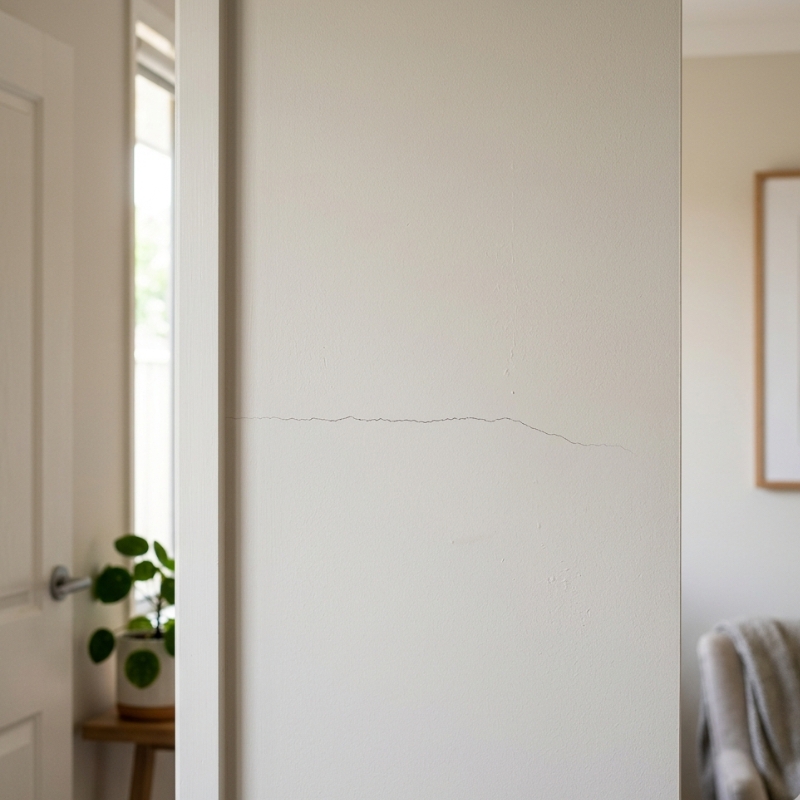
Finding another hairline fissure across a freshly painted wall is frustrating enough. Realising it is the same crack you filled last summer is even worse. Although a quick skim of compound masks the line for a few months, it does not fix the reason the board keeps splitting. Before you reach for more filler, take a step back and look for the forces behind the damage. Understanding those causes will save you time, money, and yet another sanding marathon. In this guide, we break down seven of the most common reasons gyprock cracks return in Sydney homes, explain how to tell a cosmetic problem from a structural warning sign, and outline what you can safely do yourself. If your inspection points to deeper movement or moisture trouble, calling in professional gyprock repair can prevent a small issue from turning into a larger rebuild.
1. How Gyprock Cracks Form – and Why They Re-Appear
Gyprock (also called plasterboard or drywall) is a rigid sheet fixed to timber or steel framing. Whenever the framing moves, the board flexes. If movement is small and slow, the surface may cope. When movement is larger, sudden, or occurs near a joint, the plaster compound loses grip and a fracture line opens.
Simply skimming over that fracture with more compound often works for light cosmetic splits, but if the underlying movement returns, the fracture will reopen. Think of it as patching a pothole without fixing the road base; the cover only lasts until the next truck rolls through.
Sydney’s mix of clay soils, summer humidity, and coastal temperature swings means movement is common in both old fibro cottages and modern project homes. Understanding what is moving, swelling, or shrinking underneath is the key to a longer-lasting fix.
2. The 7 Underlying Causes Sydney Homeowners Should Check
Below are the core culprits our team sees most often when recurring cracks become a homeowner’s regular weekend project. Each cause is marked as mainly cosmetic, watch-and-wait, or potentially serious to help you prioritise.
2.1 Seasonal Timber Frame Movement
Timber studs and ceiling joists expand as they absorb humid summer air and contract during Sydney’s drier winter spells. Joints at door heads, window corners, or room junctions take the brunt of that in-out cycle. If the board-to-frame fixing is tight, the sheet strains until the joint compound splits.
• Early warning sign: thin cracks forming at ceiling/wall corners in late winter, closing slightly by late summer.
• Safe DIY step: Use flexible acrylic gap sealant in corners rather than rigid filler so the joint can flex.
2.2 Fluctuating Moisture Inside Wall Cavities
Leaking shower membranes, blocked gutters, or even persistent condensation can introduce extra moisture into gyprock. Wet boards swell and soften, then shrink as they dry, creating stress around screw heads and joints.
• Check: run a moisture meter across the crack line after rain or a long shower session.
• Action: trace and repair the moisture source before patching the surface.
2.3 Rapid Temperature Swings and Thermal Expansion
North-facing brick veneer walls can hit 60 °C on a hot afternoon while the internal air-con keeps the indoor side at 22 °C. That gradient makes boards bow slightly. Ceiling areas above kitchens or skylights behave the same way. Over time, constant bowing stresses joint compound.
• Mitigation: improve roof ventilation and insulation, or use flexible jointing tape in high-heat zones.
2.4 Poor Original Jointing or Skim Work
Pressed for time, some builders apply thin coats of mud, forget bedding compound behind the tape, or skip a second coat. A hairline fracture that shows up within the first year often traces back to sub-standard jointing.
• Tell-tale: tape edges visible through paint or a hollow sound when you tap the joint.
• Fix: dig out the joint and re-tape properly; patching over the top rarely lasts.
2.5 Structural Settlement or Foundation Movement
All houses settle, but uneven settlement – often due to reactive clay soils under part of the footing – can twist frames and shear board joints. Diagonal cracks running from door corners or window heads down toward the floor often point to settlement.
• Red flag: cracks wider than 2 mm that reopen quickly after repair or that run through cornices and into ceiling sheets.
• Next step: consult a structural engineer or building inspector if you suspect footing movement.
2.6 Vibration and Dynamic Loads
Homes near busy roads, train lines, or construction sites experience low-level vibration daily. Slamming internal doors or heavy foot traffic on an upper floor can have a similar effect. Over time the shaking loosens old fastenings, allowing the board to move slightly and crack.
• Quick test: hold a glass of water against the wall when heavy traffic passes; visible ripples indicate vibration exposure.
• Prevention: add additional drywall screws near long crack lines to tighten the sheet before patching.
2.7 Previous DIY Patching Mistakes
It sounds harsh, but the patch itself is sometimes the problem. Common errors include:
• Using a straight setting compound without a flexible topping coat.
• Sanding back to a razor-thin edge that cannot cope with movement.
• Painting before the compound fully dries, trapping moisture.
Any of these can leave the joint weaker than before, leading to a familiar crack within months.
3. Minor vs Serious Cracks: A Quick Comparison Table
A recurring crack can feel dramatic, but not all fractures point to foundation failure. The table below compares common crack scenarios to help you decide whether to monitor, patch, or seek expert assessment.
| Situation | What It Often Means | Suggested Next Step |
| Hairline (<1 mm) straight across joint tape | Normal seasonal movement or slight tape shrinkage | Use flexible filler, repaint, recheck after 6 months |
| Horizontal crack at ceiling line with cornice separation | Possible roof truss uplift or humidity movement | Flexible caulk the gap, monitor after next season change |
| Diagonal crack from door head to floor, widening | Local wall or footing movement | Arrange professional structural assessment |
| Repeated nail pop clusters along stud line | Frame contraction or loose fixings | Re-screw, patch with compound, paint |
| Cracks showing brown water stains | Moisture ingress behind board | Trace leak, dry cavity, replace damaged gyprock |
| Wide crack (>3 mm) paired with sticking door | Potential structural shift | Seek engineering advice before cosmetic repair |
Minor cosmetic cracks respond well to flexible filler and repainting. If you see widening gaps, diagonal patterns, or associated moisture/door issues, pause DIY plans until a professional investigates.
4. Common DIY Mistakes That Make Cracks Return
- Rigid filler in flexible areas
Acrylic gap sealant can flex up to 15 %. Standard setting compound flexes less than 1 %. Use the wrong product and the line splits at the first seasonal change. - Skipping the joint tape on a moving seam
The compound alone lacks tensile strength. Paper or fibreglass tape bridges the joint so the filler stays intact. Always bed tape into the first coat on any repeat offender line. - Ignoring moisture content
Patching a damp board traps moisture, keeping the core soft. Check moisture levels and run a fan heater or dehumidifier before you start. - Feathering too thin
Sanding the edge paper-thin looks great under a work light, but leaves almost no compound over the joint. Aim for a gentle 30-40 cm feather on either side so the final coat retains thickness. - Repainting immediately
Water-based compounds may feel dry in 4 hrs yet hold internal moisture for 24. Painting too early blocks evaporation and weakens the set.
Avoiding these traps boosts your patch’s lifespan, but remember – if movement or moisture remain unchecked, even a textbook repair can still fail.
5. Inspection Checklist After Heavy Rain or Heatwaves
Sydney weather swings can trigger fresh cracks within days. Run through this five-minute checklist to catch issues early:
- Check internal corners and cornice lines for new gaps.
- Press gently along previous repair zones; any crunching sound means the compound has detached.
- Look for fine dust on skirting boards – a silent sign of new movement above.
- Open and close nearby doors; new sticking suggests frame shift.
- Shine a torch across suspect walls at a shallow angle to highlight hairline fractures.
If you log dates and notes in your phone, you can track whether cracks stabilise or widen – valuable data for a professional if you need one.
6. What You Can Tackle Safely vs When to Call a Professional
Sydney’s renovation-savvy homeowners handle plenty of light repairs themselves. The key is knowing where the DIY line ends.
Safe DIY Tasks
- Filling single hairline cracks under 1 mm that stay consistent for 6 months.
- Re-screwing loose boards where studs are easy to locate.
- Applying flexible sealant in ceiling-to-wall junctions.
Consider Professional Help When
- Cracks return within weeks of a proper repair.
- Width exceeds 2 mm, or you can slide a credit card into the gap.
- Moisture staining accompanies the fracture.
- Multiple rooms show new diagonal cracks at the same time.
- You suspect wall or footing movement and need independent assessment.
For deeper structural or moisture-related causes, trades and inspectors have tools such as laser levels, boroscopes, or slab moisture probes most homeowners lack. Their report also supports any future warranty or insurance claim.
7. Next Steps if Cracks Keep Returning
- Photograph and measure the crack monthly.
- Note weather conditions and any building work nearby.
- Check for leaks, condensation, or gutter overflow.
- Revisit framing tightness – add screws if the board feels loose.
- If the line widens or new cracks appear, seek an assessment. Reading the difference between hairline and structural cracks can help you decide how urgent that call needs to be.
An early inspection is cheaper than repeated cosmetic fixes. NSW homeowners can also review guidance from NSW Fair Trading on rectifying defective building work if your property is still under warranty.
FAQ
- Do hairline cracks in new gyprock always mean poor workmanship?
Not necessarily. Fresh timber can shrink slightly as it acclimatises, pulling joints open. If the crack is thin, straight, and not widening, flexible filler and a repaint are usually enough. Visible tape lines, however, often point to rushed jointing work. - How wide is “too wide” for a DIY gyprock crack repair?
Once a crack reaches around 2 mm, movement is strong enough that ordinary filler may fail. Anything bigger, diagonal, or paired with sticking doors deserves at least a professional opinion. - Can I just paint over a crack with elastic paint?
Elastic or membrane paints stretch more than standard acrylics, but they still rely on the substrate remaining intact. If the joint compound below is loose, the paint will tear. Always repair the joint first. - Will installing control joints stop recurring cracks?
Purpose-made control joints in long corridors or large ceilings allow plates to move independently. They can reduce cracking in those specific areas but will not fix moisture, poor framing, or settlement elsewhere. - How long should a professional gyprock repair last?
When the underlying cause is addressed – moisture fixed, framing stabilised, proper taping used – a repair should blend in for many years. Seasonal hairlines may still appear in high-movement corners, but the original crack should not reopen.
Final Thoughts
Gyprock cracks are a symptom, not the disease. A smooth, lasting finish depends on identifying whether timber movement, moisture, thermal shock, poor jointing, vibration, settlement, or past DIY shortcuts are driving the damage. A thorough inspection after major weather shifts, combined with flexible fillers, correct taping, and moisture control, can keep minor lines from reappearing. If wider gaps or structural patterns develop, engaging qualified gyprock trades or engineers early protects your home before surface blemishes become costly rebuilds.

